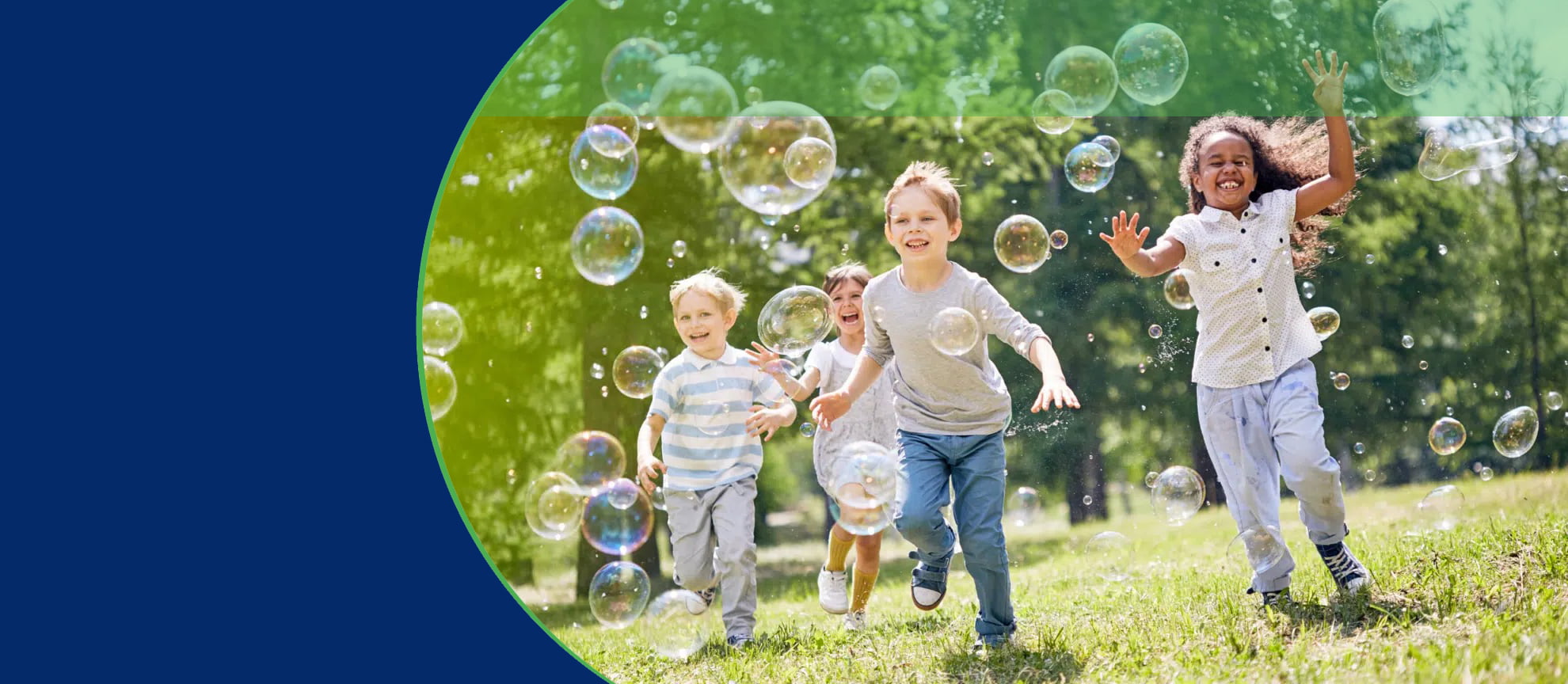
Bilingual Preschool Program
Built on French Immersion, Designed for Lifelong Learning
A full bilingual curriculum in a calm, structured classroom. Children build confidence, language, and foundational academic skills — guided every step of the way by experienced teachers. Discover why families choose bilingual immersion.
Ages 3 – 6 Years
A Structured Bilingual Classroom Built for This Age
The preschool years are when children make their biggest developmental leap — from parallel play to real collaboration, from listening to expressing, from curiosity to structured thinking.
At Koala, our preschool program is built on the French national curriculum—one of the most rigorous and well-structured early childhood frameworks in the world. Learn more about our teaching philosophy. Every day is designed around five learning domains, long uninterrupted work periods, and a bilingual environment where French and English flow naturally side by side.
Children are never left to figure things out alone. Teachers guide, model, and support — creating the kind of calm, purposeful classroom where real learning happens. Families can also explore our toddler preschool program for younger learners beginning their bilingual journey.
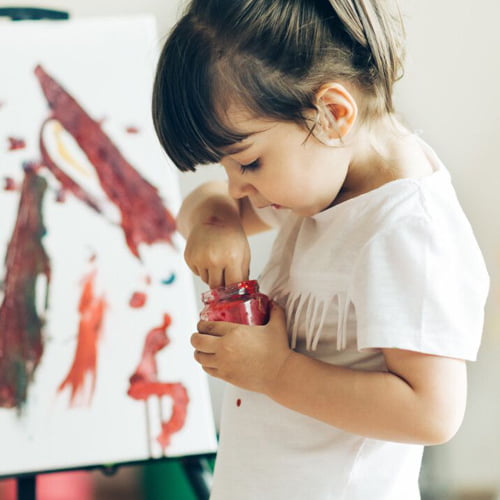
Daily Life
A Typical Day in Preschool
Predictable structure builds security. When children know what comes next, they can focus on what matters — learning, playing, and growing together.
Our Bilingual Curriculum
Five Domains, One Thriving Child
Our preschool curriculum is structured around five core learning domains — the same framework used in French national early childhood education. Every domain is taught bilingually, every day.
Mathematics
Children explore numbers, shapes, patterns, and logic through hands-on play and guided activities. Teachers spark curiosity — encouraging children to sort, count, compare, and reason from an early age. Math is not a worksheet. It's a way of thinking.
Language & Literacy
Children speak, listen, reflect, and gradually discover reading and writing — in both French and English. Teachers model rich, precise language every day. Oral expression comes first, written language follows naturally and without pressure.
Physical Education
Movement is learning. Physical activities develop motor skills, spatial awareness, coordination, and body confidence. Children also learn cooperation, respect for others, and how to express themselves through movement — indoors and outside every single day.
Exploring the World
Science, nature, time, space, and culture. Children observe, question, experiment, and begin to build rational understanding of the world around them. Teachers guide them from intuitive perception toward structured thinking — always in both languages.
Arts & Creative Expression
Visual arts, music, dance, theater, and storytelling. Children develop a creative voice and learn to appreciate artistic expression in all its forms. Art is not a break from learning — it is one of the most powerful ways young children process and communicate what they know.
Social & Emotional Learning
Woven through every domain, every day. Children learn to recognize emotions, resolve conflicts respectfully, take turns, collaborate, and build genuine friendships — in a classroom that models the values we want them to carry for life.
What Parents Ask Most
Will My Child Be Ready for Kindergarten — and Not Fall Behind in English?
This is the question we hear most from American families. And it deserves a direct answer.
Children who go through a structured bilingual preschool do not fall behind in English. Research consistently shows the opposite — they often enter kindergarten with stronger focus, better reading flexibility, and more analytical approaches to math than their monolingual peers.
Here is why: when a child learns to manage two language systems every day, they are not just learning words. They are training their brain to focus, filter, switch, and persist. Those are exactly the skills that drive academic success — in any language, in any subject.
Your child will enter their American kindergarten knowing how to sit, focus, collaborate, and think. The French is a bonus. The brain development is the real advantage. Many parents begin by reading more about the benefits of bilingual education.
Your child will not simply learn French. They will build a brain that is more focused, more flexible, and better at solving problems. They will enter kindergarten ready — not just academically, but cognitively and socially.
The Koala Bilingual Method
Stronger in Reading
Bilingual children learn to read with greater flexibility. Having processed two phonetic systems, they approach English reading with stronger phonemic awareness and pattern recognition.
English & French literacyStronger in Math
Children who learn math concepts in two languages approach problems with multiple strategies. They learn early that there is more than one path to a solution — a critical thinking skill that extends far beyond arithmetic.
Multi-strategy thinkingStronger Executive Function
Focus, task-switching, working memory, and impulse control — these are the skills teachers notice immediately in bilingual children. They sit better, persist longer, and adapt faster in a new classroom environment.
Attention · Focus · PersistenceSocially and Emotionally Ready
A child who has navigated two languages daily is more comfortable with difference, more confident in unfamiliar situations, and more empathetic toward others. These are not just social skills — they are life skills.
Confidence · Empathy · ResilienceBuilt for Long-Term Academic Success
The real goal is not French fluency. It is a child who knows how to learn — who persists when things are hard, thinks flexibly when problems are complex, and approaches new subjects with curiosity rather than anxiety. That foundation serves them in every classroom, every grade, for life.
Lifelong learner · Not just bilingualYour Role as a Family
What You Can Expect as a Koala Parent
Great early education is built on three relationships — between the child and the teacher, between the school and the family, and between learning and home. We take all three seriously.
From your child's first day, our teacher builds a consistent, open dialogue with your family. You are never out of the loop — and your involvement is always welcomed. You can also explore our family community events throughout the year.
Daily Reports
Activities, meals, rest, and observations — shared every day so you stay connected to your child's experience even when you're not there.
Open Door Policy
Questions, concerns, observations — our teacher is accessible and responsive. We believe parents and educators are on the same team, always working toward the same goal.
No French Required at Home
You do not need to speak French to support your child's development. The immersion happens at school. At home, your job is simple — read together, talk together, and trust the process.
Trust the Timeline
Progress is not always visible. There may be quiet periods where it seems nothing is happening. It is. The brain absorbs, organizes, and then produces. Every child develops at their own pace — and that is exactly how it should be.
Ready to Secure Your Child's Spot?
Koala opens for the 2027–2028 school year in West Cary, NC. Spots are limited and families are already joining the waiting list. Reserve your place today.
West Cary, NC · Opening 2027–2028 · No French required