
Why a Bilingual Preschool —
And Why French?
The benefits of early bilingual education go far beyond speaking two languages. Here is what the science says—and why French is one of the best choices you can make for your child's future. Discover how our bilingual preschool program brings these principles to life.
The Science
What Bilingualism Actually Does to a Child's Brain
Bilingualism is not just a communication skill. It is a cognitive workout that shapes how children think, focus, and adapt — for the rest of their lives.
Stronger Focus & Attention
Bilingual children constantly manage two language systems — filtering, switching, selecting. This daily mental exercise builds exceptional attention spans and resistance to distraction.
Mental Flexibility
Switching between languages trains the brain to adapt quickly, think from multiple perspectives, and approach problems with creative flexibility — skills that transfer to every subject and situation.
Better in Reading & Math
Research consistently shows bilingual children outperform monolingual peers in reading comprehension and mathematical reasoning — not despite their bilingualism, but because of it.
Third Language Advantage
Bilingual children learn additional languages significantly faster than monolinguals. Each language learned reinforces and accelerates the next — giving your child a lifelong head start.
Career & Life Advantage
In an increasingly globalized world, bilingualism opens doors — to careers, relationships, and opportunities that monolingual peers simply cannot access. The advantage compounds over time.
Greater Empathy & Openness
Children who grow up in two languages develop a broader worldview — more comfortable with difference, more empathetic toward others, and more resilient in the face of change.
What the Research Shows
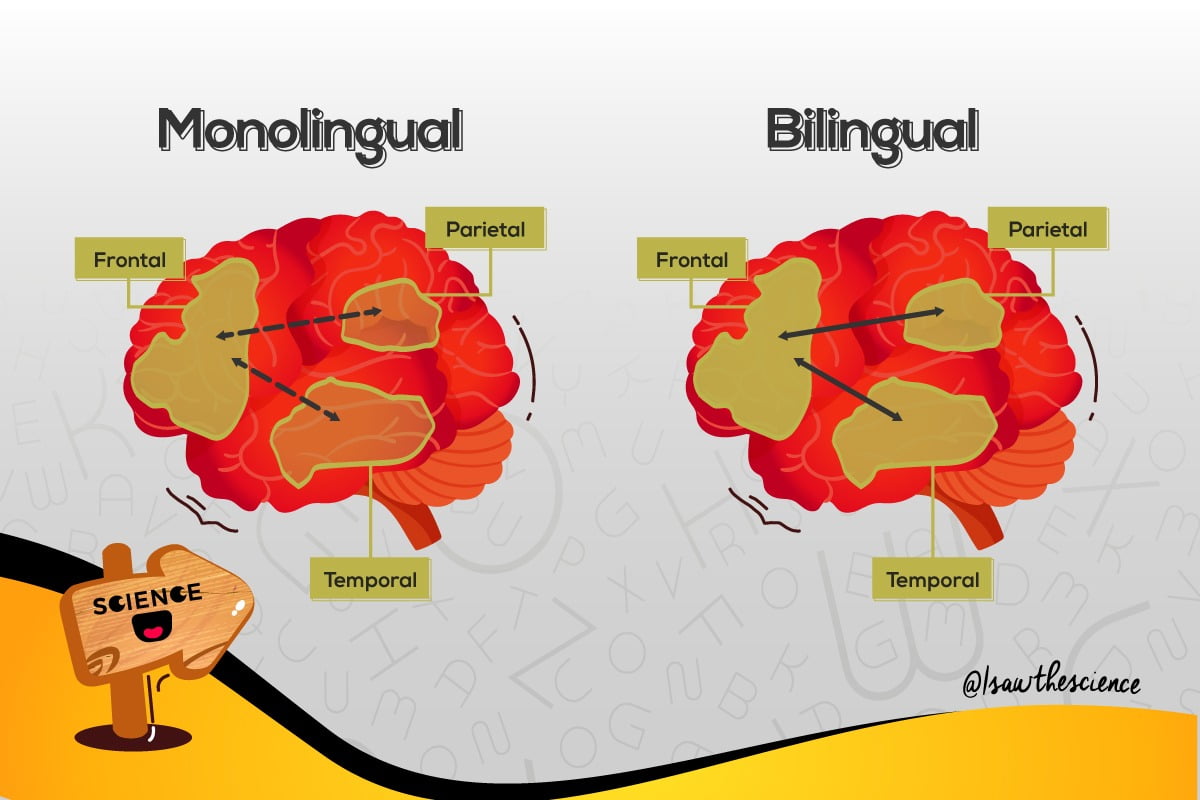
A Bilingual Brain Is Structurally Different
Brain imaging studies show that bilingual individuals develop stronger connections between key language and cognitive processing regions — particularly the frontal and parietal areas responsible for attention, planning, and decision-making.
The earlier a child is exposed to two languages, the more deeply these structural differences take hold. The window between birth and age 5 is the most critical period for language acquisition — and for building the cognitive architecture that bilingualism creates.
Bilingual Development
French & English Build One Shared Foundation
Jim Cummins described bilingual development through the idea of a Common Underlying Proficiency: the two visible languages may look separate, but underneath they rely on a shared base of comprehension, reasoning, memory, and learning skills — this is called the Cummins Iceberg.
That means a child who develops reading, vocabulary, logic, and understanding in French is also strengthening skills that support English. This same approach is used throughout our preschool curriculum.
Two languages do not confuse the child — they support each other.
Going Deeper
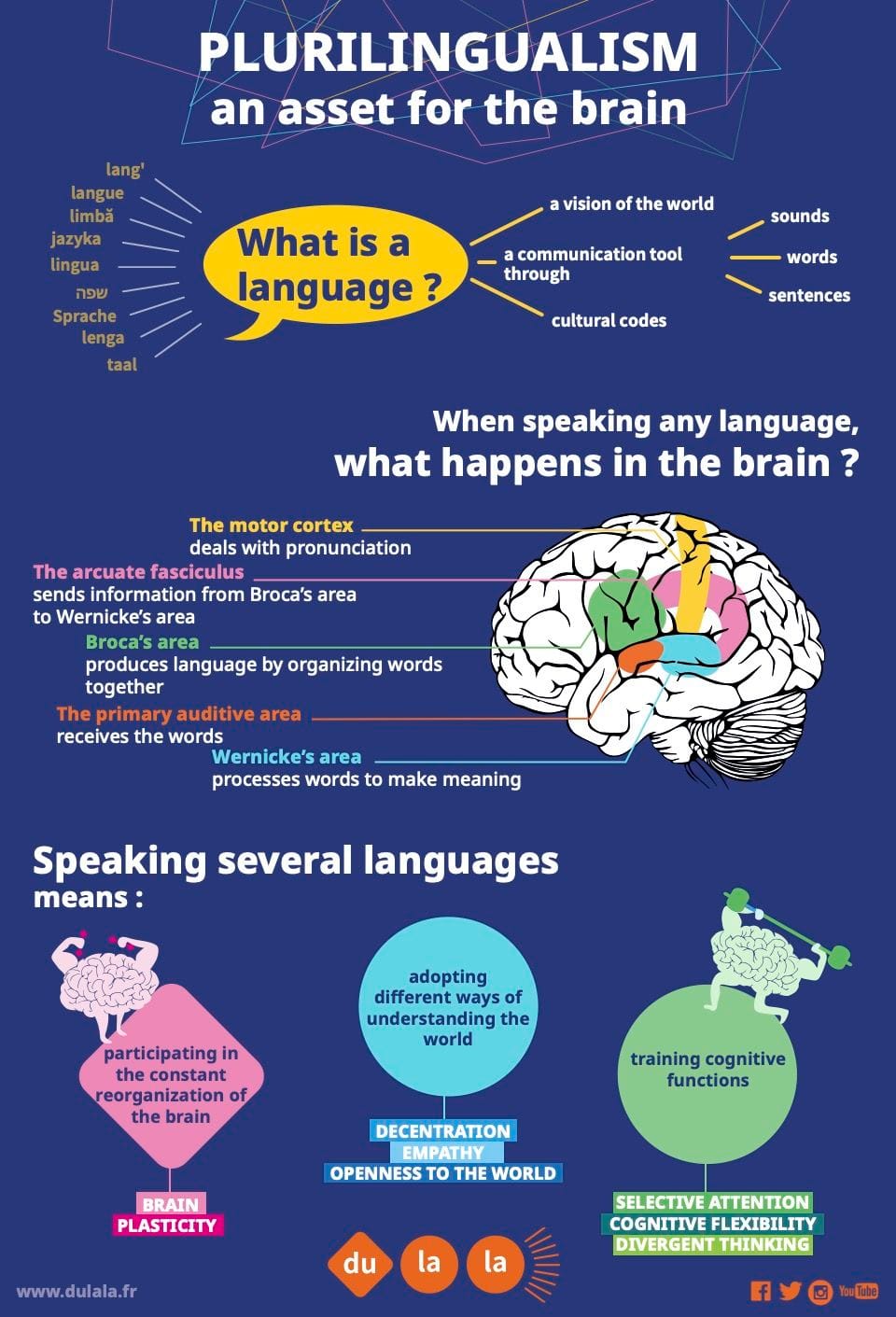
Plurilingualism — An Asset for the Brain
Speaking several languages means more than words. It means participating in the constant reorganization of the brain — building plasticity, empathy, and cognitive flexibility that lasts a lifetime.
Why French Specifically
French Is One of the Best Languages Your Child Can Learn
French is not just a European language — it is a global one, and its influence is growing. With over 300 million speakers today and projections exceeding 700 million by 2050, French is one of the few languages spoken across every continent.
Beyond its global reach, the French educational system is recognized worldwide for its academic rigor, structured learning, and high standards. Children educated within this framework develop strong analytical thinking, intellectual curiosity, and a lifelong confidence in learning. Discover how these principles come to life in our bilingual preschool program .
Ready to Give Your Child This Advantage?
Koala opens in West Cary, NC for the 2027–2028 school year. Join the waiting list today and be first in line when enrollment opens.
West Cary, NC · Opening 2027–2028 · No French required. Families with younger children can also explore our toddler program before joining the waiting list.